
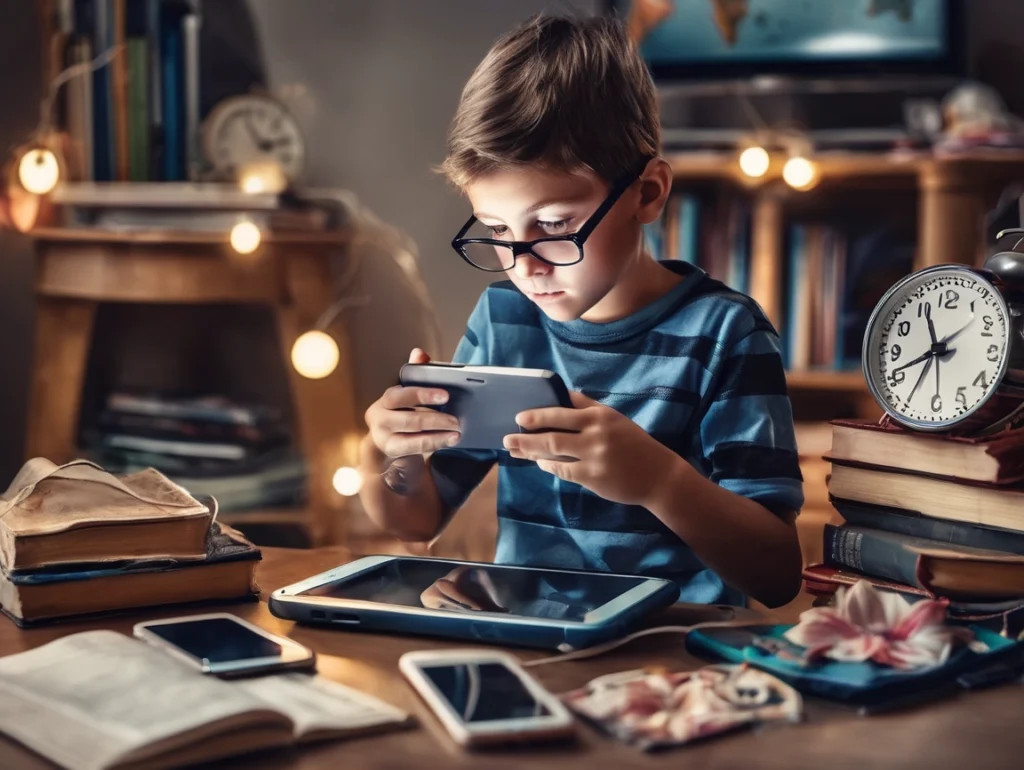
Let’s be honest — screens are a big part of our kids’ lives now. And in my house, even though I know all the “cons” of screen time, weekends often end up with three or four hours of screen use. Sometimes it’s because, let’s face it — when the kids are quietly watching or playing, they’re focused, calm, and not fighting over toys… and parents finally get a short break. I used to feel guilty about it, but over time I realized that balance is really what matters most.
From learning apps and cartoons to games and YouTube, screens are everywhere. But research keeps reminding us that how much and what kind of screen time kids get really matters.
Too much screen time, especially for younger children, can affect their emotions, behavior, and learning in ways we might not see right away. Studies show that kids who spend long hours in front of screens — especially those under 10 — are more likely to struggle with things like anxiety, frustration, or trouble focusing. Sometimes, when kids feel bored or upset, they turn to screens to feel better, which can easily become a habit that’s hard to break.
Not all screen time is the same, though. Educational shows or learning games are very different from fast-paced gaming or endless scrolling. Research suggests gaming tends to carry higher risks for behavior problems, while educational content has fewer downsides. Interestingly, studies also show that girls are more likely to develop emotional stress when screen time increases, while boys tend to turn to screens more when they’re already feeling disconnected or upset.
For the little ones, the effects can be even stronger. Babies and toddlers who spend more than a few hours a day watching shows or videos often show slower progress in talking, problem-solving, and fine motor skills later on. Some studies even link heavy screen use to changes in the brain areas responsible for reasoning and decision-making.
As kids grow, screens can also influence how they learn and connect with others. Too much time online can replace real-life play and conversations — the kind that spark imagination, creativity, and social skills. It can also interfere with sleep, increase anxiety, and make focusing on schoolwork harder.
Of course, this doesn’t mean we have to ban screens completely. Technology isn’t the enemy — it just needs boundaries. Setting screen limits, encouraging outdoor play, reading, or creative hobbies, and watching together when possible can all make a big difference.
Screens aren’t going away anytime soon. But by staying mindful of when, how long, and what kind of content our kids are watching, we can help them get the best out of technology — without letting it take over their growing minds.
Mom’s Takeaway: What Works in Our Home
Here’s what we try to do as a family — not perfectly, but enough to keep things in balance most days:
- Weekend limits: We’re a bit more flexible on weekends, but we try to keep total screen time around 2–3 hours, with some breaks in between.
- No screens during meals or bedtime: Dinner and bedtime are our “no-device” zones. That’s when we talk, share stories from the day, and wind down together.
- Be intentional with content: We stick to educational shows, creative games, or family-friendly movies. No fast-paced or overly stimulating stuff. And our kids don’t scroll YouTube or the internet freely — someone’s always nearby or listening in.
- Watch together when we can: Co-watching lets us talk about what they’re seeing — it turns screen time into connection time. If we’re not sitting together, the rule is to keep the volume loud enough so my husband or I can still hear what’s playing.
- Balance with real-life fun: We make sure there’s plenty of time for outdoor play, reading, or just plain boredom — because that’s when imagination really kicks in! Saturdays are usually for tennis or soccer lessons, and Sundays are our “free activity” days — but we still try to get out of the house, even if it’s just to a nearby park or café.
At the end of the day, screens are part of childhood now. The goal isn’t perfection — it’s finding that sweet spot between tech, play, and real connection.
📚 Worth Reading
If you’d like to dive deeper, these are some great articles and studies that explore how screen time affects kids’ brains, emotions, and behavior:
Sliwa, J. (2025, June 9). Screen time and emotional problems in kids: A vicious circle? Apa.org. https://www.apa.org/news/press/releases/2025/06/screen-time-problems-children
Alaimo, K. (2025, June 9). Screen time is both a cause and symptom of kids’ bad behavior, according to new research. CNN. https://edition.cnn.com/2025/06/09/health/screen-time-kids-emotional-problems-alaimo-wellness
Cross, J. (2023, August 24). What Does Too Much Screen Time Do to Kids’ Brains? NewYork-Presbyterian; Health Matters. https://healthmatters.nyp.org/what-does-too-much-screen-time-do-to-childrens-brains/
Muppalla, S. K., Vuppalapati, S., Pulliahgaru, A. R., & Sreenivasulu, H. (2023, June 18). Effects of Excessive Screen Time on Child Development: an Updated Review and Strategies for Management. National Library of Medicine; Cureus. https://pmc.ncbi.nlm.nih.gov/articles/PMC10353947/
CHOC. (2024, August 27). The effects of screen time on children: The latest research parents should know – CHOC – Children’s health hub. CHOC – Children’s Health Hub. https://health.choc.org/the-effects-of-screen-time-on-children-the-latest-research-parents-should-know/